Taqyeem
Finding the Right Words: GEI’s Role in Transforming Evaluation in the MENA Region


“Evaluation must be done in Arabic—but there’s no established vocabulary. That’s the first, and biggest, challenge.”
This, according to Aref Ben Abdallah, Taqyeem Program Manager, captures a core issue facing the Middle East and North Africa (MENA) region. In much of MENA, the practice of monitoring and evaluation (M&E) has long been donor-driven and dominated by foreign languages—primarily English and French. As governments began building national evaluation systems, they faced a significant obstacle: language.
Without standardized Arabic terms for core evaluation concepts like outcome, impact, or effect, definitions varied widely across countries and dialects. This made training inconsistent, publications scarce, and public sector uptake difficult. Recognizing this gap, in 2021, the Global Evaluation Initiative (GEI) launched a mission: make evaluation accessible and useful by rooting it in local language and context.

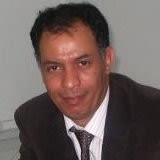
Aref Ben Abdallah,
Taqyeem Program Manager


A Timely Intervention
In 2020, momentum grew around Arabic-language evaluation in MENA. The establishment of the Al-Athar Center in Saudi Arabia, and growing interest from the École nationale d'administration publique (ENAP)—a GEI implementing partner—to adapt its French program, Programme international de formation en évaluation du développement (PIFED), to Arabic, signaled a new opportunity. The World Bank’s Independent Evaluation Group (IEG) helped lay the groundwork by championing Arabic-language evaluation, backing key partners, and investing in efforts to localize evaluation practices across the region.
Taqyeem, developed by ENAP in partnership with GEI and the Islamic Development Bank (IsDB), is a regionally grounded Arabic-language training program that equips public sector professionals to strengthen M&E systems. GEI convened partners, provided technical support, and ensured the program addressed linguistic diversity and institutional fragmentation. By embedding global best practices in a locally tailored format, Taqyeem exemplifies GEI’s integrated, systems-based approach to capacity building.




Translating More Than Words
“The term ‘outcomes’ was very challenging to translate,” said Aref Ben Abdallah. “We developed a glossary of over 100 Arabic evaluation terms, discussed with the IsDB team working on the Arabic version of the OECD-DAC criteria.”
Grounded in these internationally recognized standards for assessing the relevance, effectiveness, efficiency, impact, and sustainability of development interventions, the glossary became one of Taqyeem’s most transformative outputs—helping unify practice, education, and policy across Arabic-speaking contexts.
“Many scholars and practitioners supported the initiative. We held meetings—sometimes just to agree on a single term,” said Aref. “But all believed it was a necessary step.”
GEI facilitated these efforts, drawing from international best practices and supporting inclusive participation. Inspired by Professor Richard Marceau’s “Dictionary of Evaluation Terminologies”, GEI brought together linguists, lexicographers, and evaluation experts to ensure terminology was both accurate and culturally appropriate.
Building Capacity, Building Systems
“GEI delivered capacity-building interventions in Arabic, ensuring that critical evaluation concepts were not lost in translation,” said Dugan Fraser, GEI Program Manager.
Through Taqyeem, GEI and partners such as ENAP, UNDP, and regional institutions designed and delivered training that was both technically sound and culturally resonant.
So far, more than 300 professionals from 13 countries have completed the training. With 45% female participation, Taqyeem promotes gender-sensitive evaluation frameworks and supports GEI’s goal of social inclusion. Integration into national systems has influenced planning and budget allocation, aligned with development goals and the Sustainable Development Goals.
Egyptian officials now use Taqyeem to guide national strategy and improve service delivery. “The training enriched our knowledge of impact evaluation fundamentals,” said Sahar Sabry, Director General, Strategic Impact Evaluation Department, Egypt. “It contributed to the effective planning of tasks and outputs.”
Sabry’s team developed a three-year evaluation framework and launched sectoral evaluations in early 2025—including for social housing—showing how Taqyeem is now driving strategic planning in Egypt.


Dugan Fraser,
GEI Program Manager


Bridging Fragmentation, Catalyzing Collaboration
Historically, evaluation in MENA was siloed by dialect, discipline, and geography. GEI helped bridge these divides by establishing a shared vocabulary and network.
“GEI has helped overcome longstanding barriers,” said Dr. Luna Shamieh, Senior Evaluation Expert. “Now we can deliver training and publish in Arabic.”
“As an academic and trainer, I used to mix Arabic and English terms. Now I use standardized Arabic,” added Luna. “It encouraged me to publish in Arabic—something I always hesitated to do.”
Deepening Regional Roots
Taqyeem has been adopted by institutions including Morocco’s Audit Court, Egypt’s Institute for National Planning, and the National Center for the Non-profit Sector in Saudi Arabia.
It has also facilitated future initiatives: GEI and the Saudi government are exploring the creation of a Center for Learning on Evaluation and Results (CLEAR) to serve the MENA region.
Together, these developments highlight GEI’s expanding influence in shaping more coherent, locally anchored evaluation ecosystems across the region.


A Lasting Legacy
“We’ve changed how we communicate internally around evaluation,” said Dr. Noura Alotaibi, Maximus, Saudi Arabia. “Now we identify evaluation needs and respond clearly to ministerial demands. The training changed my career—I became a coach and now lead an M&E department.”
GEI aims to expand Taqyeem through new tools, refined content, and broader partnerships. It will serve as a model for scaling evaluation capacity globally through multilingual, locally-driven training.
Even now, the program has laid the foundation for a lasting culture of evaluation in Arabic. As Dr. Kaddour Mehiriz, Professor at the Doha Institute, Qatar, reflected:
“This initiative wasn’t just about terminology—it was about making evaluation our own.”

Photo by Aziz Acharki on Unsplash
Story by Graham Holliday
 Built with Shorthand